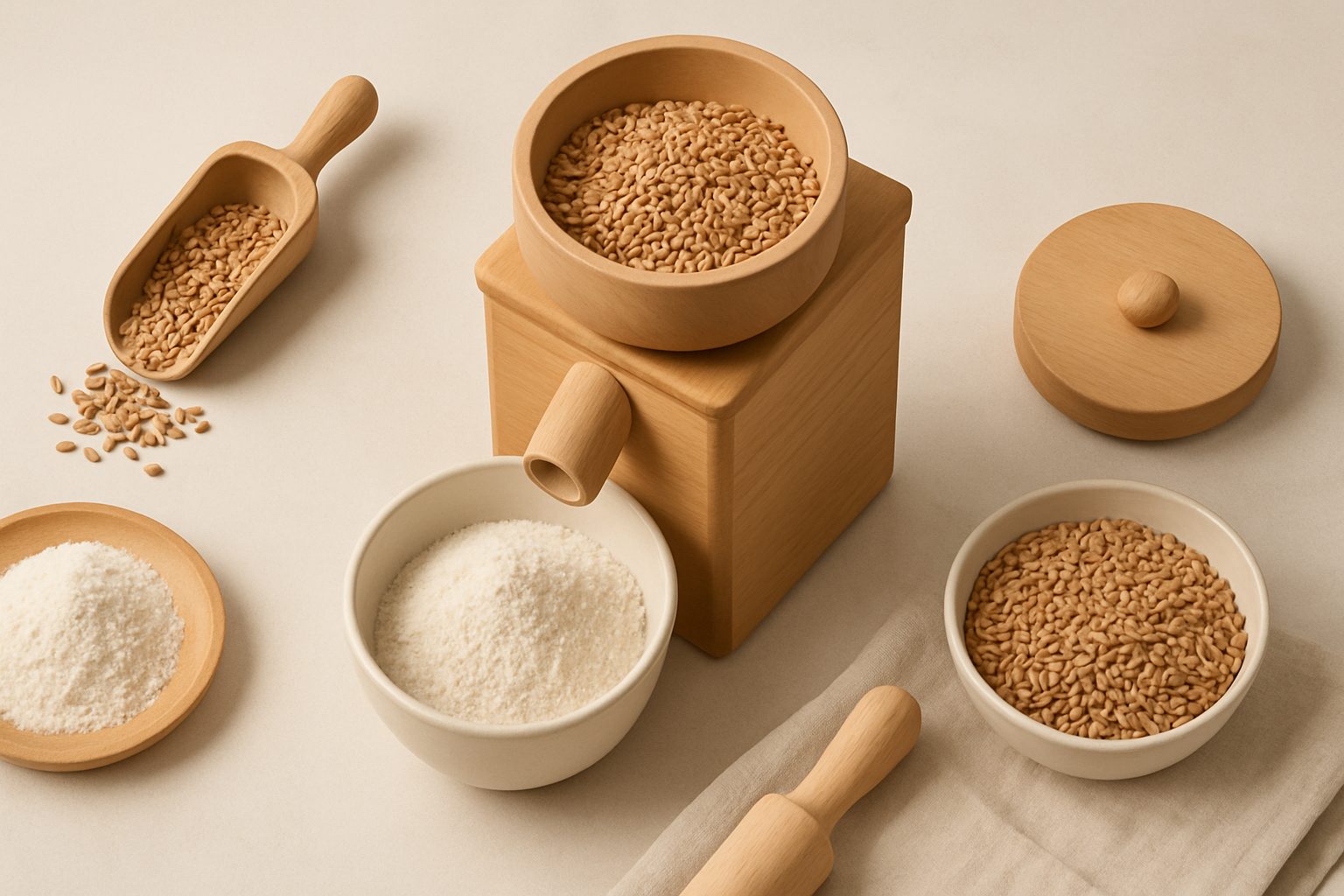
Best Budget Grain Mills Under £150 UK: Affordable Home Milling
Stepping into home grain milling doesn't have to mean spending £400 on a serious burr mill. If you're keen to experiment with fresh flour, cracking grains for brewing or animal feed, or simply curious whether milling fits your routine, budget mills under £150 exist and can do real work. The catch is knowing exactly what you're compromising on, and which models are genuinely worth it.
What You Sacrifice at Budget Prices
Grain mills under £150 in the UK market almost always use one of two approaches: blade systems or entry-level stone burrs. Neither is inherently bad, but both have real limitations compared to their pricier cousins.
Blade mills (essentially glorified blenders with burr attachments) generate heat, which damages the nutritional profile of flour and produces inconsistent particle size. You'll get usable flour, but it won't be as fine or stable as stone-burr output. Stone-burr mills at budget prices use softer stone or narrower gap tolerances that wear faster and grind more slowly.
At this price point, you're also looking at lower throughput—most will take 20–45 minutes to mill a kilogram of grain. Hand crank models are cheaper but genuinely exhausting for regular use. Electric models under £150 tend to have smaller hoppers (500g–1kg) and lower motor power, so you'll refill often and wait longer.
The Right Grain Mill for Your Budget
Hand-crank stone burr mills (£80–£140)
The Hawos Novum hand mill and Barley Crusher variants sit in this range and deliver genuine stone-burr results without electricity. They're reliable, predictable, and won't overheat flour. The downside is real: milling 1kg of wheat by hand takes 30–45 minutes of steady cranking. Most people who buy these use them occasionally—for small specialty batches, animal feed, or as backup to a faster mill.
If you're serious about regular milling, hand mills are frustrating. If you mill once a month for experimental baking, they're brilliant and borderline indestructible.
Electric blade/burr hybrids (£100–£150)
Cheaper electric mills from brands like Grinder Max or basic coffee-grinder mills work, but they're trade-offs. They heat flour (bad for raw foodists and quality bakers), produce uneven particle size, and feel temporary. They're genuinely useful for cracked grain, animal feed, or rough flour, where inconsistency doesn't matter. They're poor for making bread flour.
The motor lifespan is often short—expect 3–5 years if used weekly. They're loud and require cooling breaks after 10–15 minutes of grinding.
Entry-level stone burr electrics (£140–£160, just above budget)
If you can stretch to £150–£160, some mills cross into proper stone-burr electric territory. The Hawos Novum electric or equivalent Chinese-market burr mills at this price are qualitatively different from blade systems. Stone generates less heat, produces finer flour more consistently, and feels like a genuine tool rather than an emergency workaround.
Some UK stockists offer reconditioned or slightly older-model stone burr mills in this range—worth checking eBay or specialist outlets.
Real-World Performance Expectations
Throughput: Budget mills produce 500g–1kg of finished flour in 15–30 minutes (hand mills) or 5–10 minutes (electric blade mills), compared to 2–4 minutes for quality burr mills at £300+. If you're milling weekly, this compounds.
Flour quality: Stone burr mills deliver flour suitable for bread baking, pastry, and porridge. Blade mills produce usable flour for quick breads and pancakes, but won't perform well in yeasted dough because the heat damages gluten development.
Noise: Hand mills are silent. Budget electric mills are loud (85–90dB). If you live in a flat or mill early mornings, factor this in.
Durability: Hand mills last decades. Budget electrics often fail within 5 years. Stone burr mills (even at budget prices) generally outlast their owners.
Is a Budget Mill Worth Buying?
Yes, if you're in one of these camps:
- Testing whether home milling genuinely fits your life before investing £300–£500
- Milling occasional specialty grains or animal feed where flour consistency doesn't matter
- Looking for a hand mill for emergency backup or experimental baking
- Planning to upgrade later and want something expendable as a learning tool
No, if you:
- Bake bread weekly and want consistent results
- Plan to mill large quantities (over 2kg weekly)
- Live in a shared space and need quiet operation
- Want a tool you'll keep for 20+ years
Practical Tips for Budget Mill Success
Start with soft grains—spelt, rye, oats—which are easier to mill and forgiving of inconsistency. Hard wheat and barley are genuinely more demanding and reveal the limitations of budget mills quickly.
Hand mills benefit from a fitted stand and comfortable bench height. The standard grip will exhaust your hand in 15 minutes without these.
If you choose an electric blade mill, use it for cracked grain and feed rather than flour. You'll be happier with results and won't feel like you've settled.
Buy from UK stockists with returns policies. Some cheap mills arrive damaged or with binding burrs. Testing at home matters.
The Honest Verdict
Budget grain mills under £150 work, but they're compromise tools. A hand-crank burr mill is a better investment than a cheap electric blade mill—it's quieter, gentler on grain, and will still be functional in a decade. If you can genuinely stretch to £160, jumping to a proper entry-level stone burr electric changes the game entirely.
For £80–£100 on a hand mill, you get a genuine piece of kit. For £100–£150 on a blade electric, you get a temporary solution. Know which you need before you buy.
More options
- KoMo Electric Grain Mills (Amazon UK)
- Mockmill Stone Grain Mills (Amazon UK)
- NutriMill Harvest Grain Mill (Amazon UK)
- Manual Hand Grain Mills (Amazon UK)
- Wheat Berries & Milling Grains (Amazon UK)