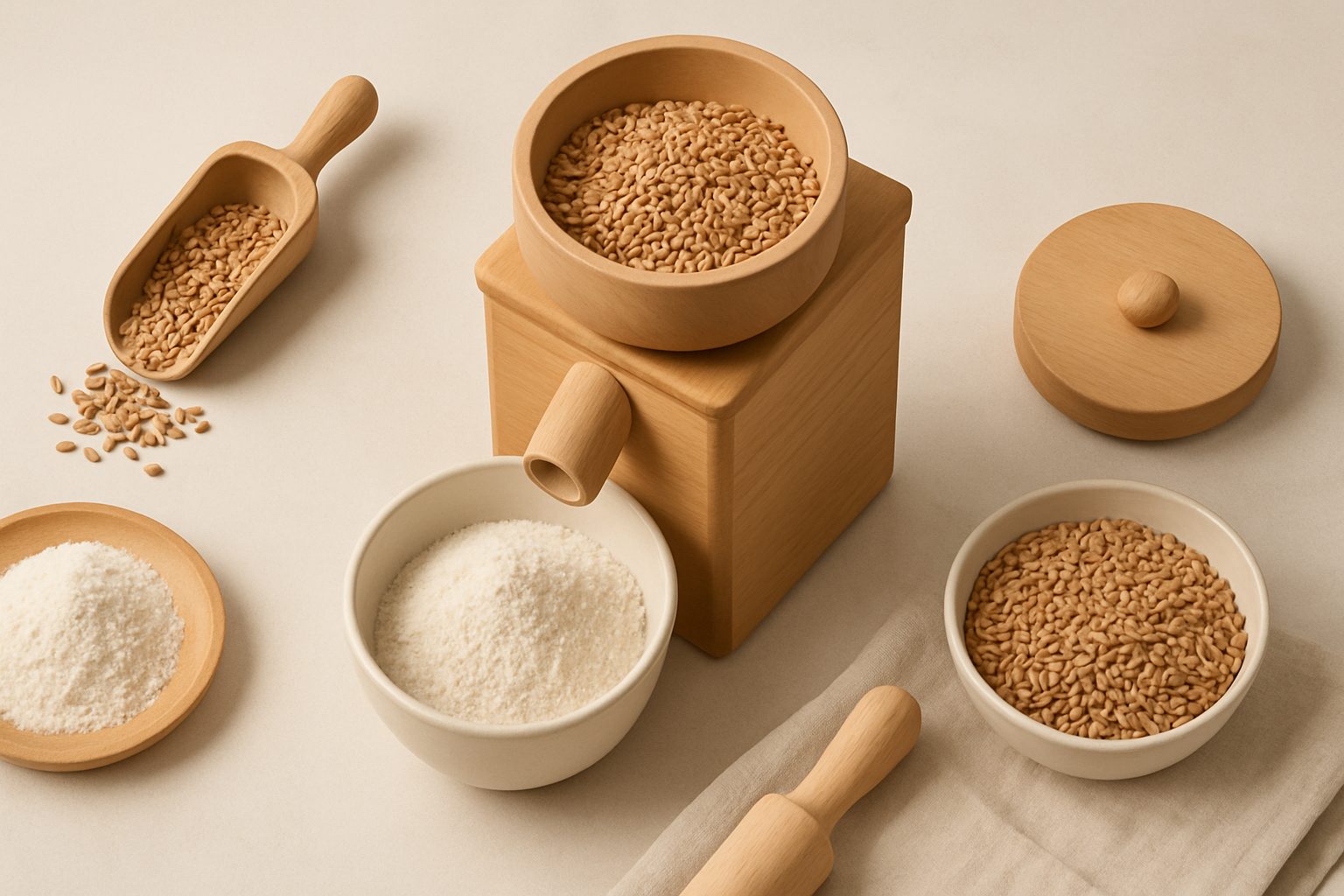
Best Electric Grain Mills for Home Use UK (2026 Reviewed)
Buying a home grain mill means committing to fresher flour, better nutrition, and more control over your milling. But choosing between four established brands—each with devoted followers—is trickier than it looks. Speed, noise, fineness, durability and price all matter, and they don't all come together in one model. This review compares KoMo, Mockmill, NutriMill and Hawos electric mills based on real performance data and UK user feedback.
What to Look for in an Electric Grain Mill
Before comparing specific models, understand what drives the choice:
Grind speed determines workflow. A fast mill saves 5–10 minutes per batch and generates less heat (which damages nutrients). Slower mills work fine for occasional use.
Noise levels range from 75 decibels (a vacuum cleaner) to 95+ dB (a lawn mower). Home kitchens and family patience have limits.
Fineness means how fine the flour becomes. Some mills excel at whole-grain flour; others struggle with very fine patisserie powder. Most users want middle ground.
Burr type—stone or steel—affects texture and heat. Stone burrs grind cooler but dull faster; steel burrs are faster and more durable but run hotter.
Motor power (measured in watts) correlates with speed and durability under load, especially with hard grains like corn.
Price in the UK ranges from £200 to £800. You're not always paying more for better; sometimes you're paying for brand prestige or features you don't need.
Head-to-Head Comparison
KoMo Flaker and Grain Mill
The KoMo is a Swiss-engineered workhorse. At roughly £650–£750, it's the most expensive here, but also the most versatile: it handles both grain milling and flaking oats in one unit.
Performance: Motor runs at 110W, producing flour in about 10–15 minutes per kilogram. Stone burrs deliver a slightly coarser, sandier texture than some competitors—ideal for sourdough and whole grains, less ideal if you want silky pastry flour.
Noise: Around 90 dB. Not quiet, but typical for its power class.
Durability: Exceptionally robust. Many users report 15+ years of trouble-free operation. Swiss warranty and spare parts are straightforward.
Downsides: The stone burrs require sharpening every 2–3 years (roughly £40–£50). Flaking function is useful but adds complexity. Heavier, so desk space must be permanent.
Mockmill (NutriMill Alternative)
Mockmill mills are manufactured in Austria and positioned as premium, professional-grade equipment. Prices run £600–£750 depending on model.
Performance: 110W motor, similar speed to KoMo (10–15 min/kg). Steel burrs produce very fine, consistent flour suitable for both bread and pastry. Less "wholemeal texture," more uniform powder.
Noise: 85–88 dB—noticeably quieter than KoMo, largely due to enclosure design.
Durability: Excellent. Heavy-duty construction, German-Austrian engineering standards. Burrs hold their edge longer than stone but cost more to replace (£60–£80).
Downsides: Burr replacement less straightforward than KoMo; fewer YouTube tutorials in English. Slightly pricier than NutriMill for comparable performance. Smaller hopper capacity (1kg) than some rivals.
NutriMill (Made in USA, UK Supply)
The NutriMill is the entry point, retailing around £250–£350 in the UK. American-made, widely available, and trusted by home bakers on tight budgets.
Performance: 110W motor, 10–12 minutes per kilogram. Stone burrs produce a warm, slightly coarse texture. Competent but not exceptional; some users report inconsistent fineness if you use very hard grains or push the capacity.
Noise: 85–92 dB depending on model variant. Acceptable for most home kitchens.
Durability: Solid mid-range performer. Good warranty (3 years), but parts availability in the UK is hit-or-miss. Burr replacement costs £40–£60 and can take weeks if ordered from the US.
Downsides: Customer service is US-based, so queries can feel slow. Plastics used in the frame can feel less robust than metal alternatives. Hopper capacity is small (0.5kg), limiting batch milling.
Hawos (German Manufacture)
Hawos mills come in two grades; the Novum Plus (around £400–£500) and Rotare (£550–£650) are the most popular in the UK. German engineering at a middle price point.
Performance: 110W motor, 12–18 minutes per kilogram depending on grain type. Steel burrs deliver a fine, uniform flour. Very capable with hard grains (spelt, rye) without burning them.
Noise: 82–85 dB—consistently the quietest option here. Enclosure design and motor mounting are well thought out.
Durability: Exceptionally well-built. Stainless steel housing, high-quality burrs, straightforward servicing. Many UK users buy Hawos specifically for reliability.
Downsides: Slightly slower than NutriMill and KoMo. Spare parts (burrs especially) can be expensive in the UK (£70–£90 per pair). Less widely stocked than KoMo or NutriMill, so comparison shopping is harder.
Which Should You Buy?
Best overall for home bakers: KoMo, if you mill regularly and value the flaking function. If you want one tool, it justifies the extra cost.
Best for quiet operation: Hawos Novum Plus or Rotare. Noise is genuinely lower, and German durability is unquestionable.
Best for fine flour: Mockmill's steel burrs produce the most consistent fine flour. Pick this if you're serious about pastry and bread-baking performance.
Best value: NutriMill. It's not the quietest or finest, but it works, costs half as much as the others, and covers most home needs capably.
The honest truth: all four mills will grind your grain into usable flour. The differences matter if you mill frequently (speed, noise, durability) or demand specific flour fineness. If you mill twice monthly, a NutriMill is entirely sensible. If you mill weekly or want professional texture consistency, spend more.
More options
- KoMo Electric Grain Mills (Amazon UK)
- Mockmill Stone Grain Mills (Amazon UK)
- NutriMill Harvest Grain Mill (Amazon UK)
- Manual Hand Grain Mills (Amazon UK)
- Wheat Berries & Milling Grains (Amazon UK)