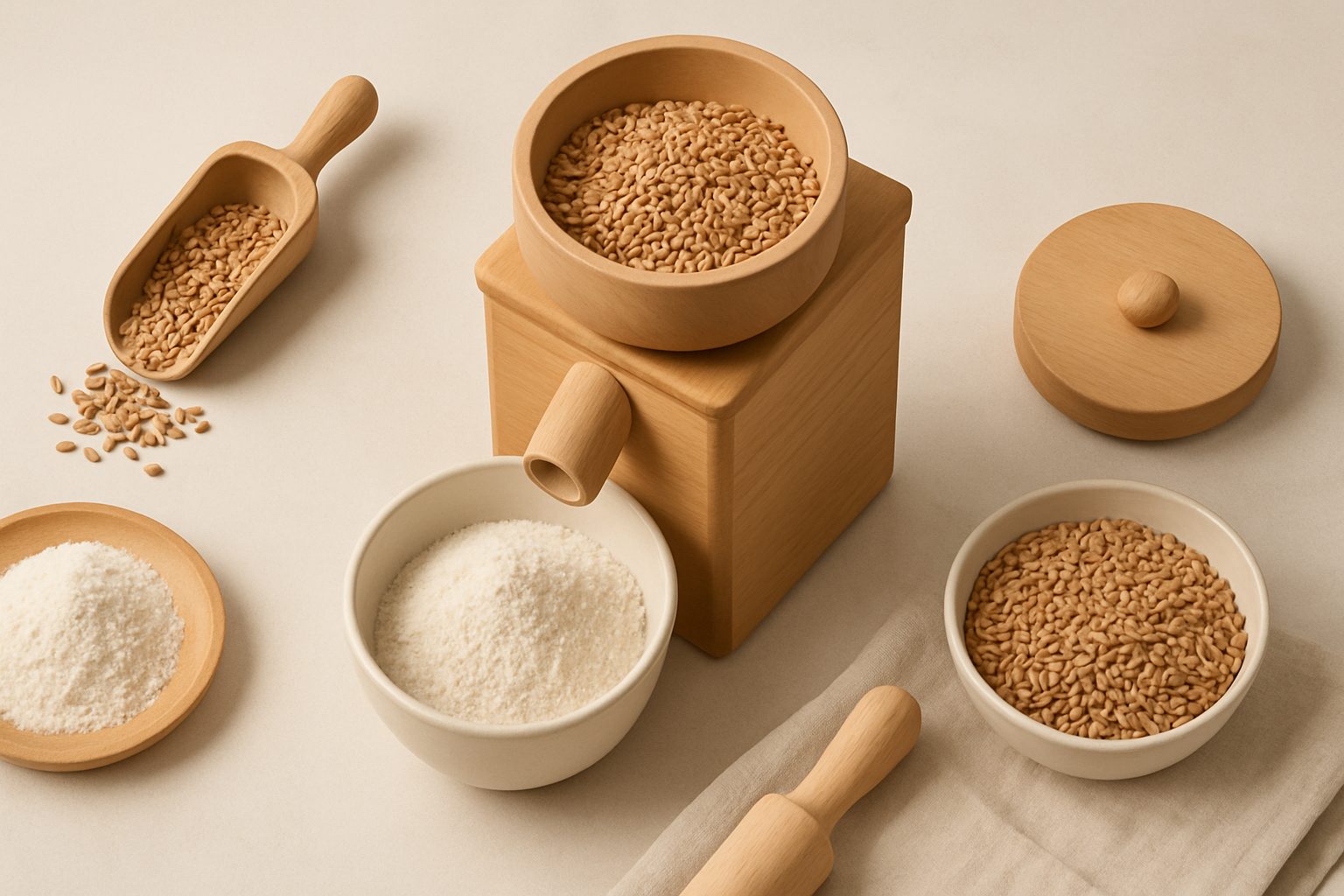
Best Stone Burr Grain Mills UK: Why Natural Stone Still Wins
The grain mill debate usually hinges on one question: burr or blade? But among people serious about milling—whether running a micro-bakery, mill-to-loaf operation, or feeding livestock—stone burr mills dominate. The real conversation is what kind of stone, and which mill delivers the best balance of durability, grind quality, and value.
Corundum vs Natural Basalt: The Core Difference
Most affordable stone burr mills now use synthetic corundum—it's marketed as durable, consistent, and low-maintenance. In practice, corundum burrs work fine for occasional milling and mill coarse flour reliably. But they lack the grinding efficiency of natural stone. Corundum is harder but less porous; it generates more frictional heat, which can degrade heat-sensitive grains like rye and spelt. Replacement burrs cost £80–£120 per set, and many users report they wear noticeably within 18–24 months of regular use.
Natural basalt—the traditional choice—behaves differently. It's slightly softer than corundum but far more porous, creating micro-channels that actually pull grain through the mill rather than just compressing it. This means cooler grinding (crucial for retaining enzyme activity and nutrition), finer flour, and burrs that often last 3–4 years under the same usage. The trade-off: natural basalt needs cleaning after every milling session to prevent flour clogging the pores. It's also heavier, so mills using it tend to be sturdier and often more expensive upfront.
If you're milling occasionally—weekly or less—corundum suits most budgets. If you're milling regularly for business or a larger household, natural basalt's longevity and grind quality justify the extra cost.
Top Stone Burr Models: Premium and Mid-Range
Osttiroler Steinmühle (Premium, £2,200–£2,800)
The gold standard in European artisan milling. Austrian-made with natural basalt burrs and cast iron construction, this mill is genuinely overbuilt. Motor runs at a controlled 150 rpm, keeping grain temperature low enough to retain whole-grain nutrition. Grind fineness adjusts via a smooth worm gear. Burr sets last 4+ years with regular milling. At this price, you're buying engineering—it'll outlast your business plan. Realistic for bakeries, mill shops, or serious smallholders.
Harke Osttiroler (Mid-Range Premium, £1,600–£1,900)
Still natural basalt, German-built, but with a slightly smaller footprint and less robust casing than the flagship Osttiroler. Motor runs at 200 rpm—still gentle but warmer than the premium model. Grind quality is excellent; burr longevity is around 3 years. This is the sweet spot for micro-bakeries or anyone running 2–3 milling sessions weekly. Less intimidating than the full Osttiroler if space or budget is tight.
Country Living Grain Mill (Mid-Range, £700–£950)
An American import popular in the UK. Uses corundum burrs and smaller cast construction. Quieter than larger mills and very easy to adjust. Realistic expectation: it's built for home use, not continuous commercial milling. Works well for a household milling flour weekly or grinding grains for livestock. Burrs wear noticeably after 18 months of regular use. Parts availability in the UK is reasonable due to its popularity.
WonderMill (Budget-Conscious, £600–£800)
Modern design with lightweight aluminium housing, corundum burrs, and easy cleaning. Grinds consistently fine flour, but generates more heat and noise. Appeals to home bakers and people wanting simplicity over durability. Replacement burrs are affordable (£40–£60), and customer support is responsive. Not suitable for daily commercial milling.
Premium vs Mid-Range: The Real Value Question
For hobby milling—weekly home baking—the Country Living or WonderMill makes sense. You'll replace burrs once, recoup the cost in better flour than supermarket stuff, and the learning curve is gentle.
For small business use (3–4 milling days per week), the Harke Osttiroler offers genuine value. You'll recover the extra £600–£900 versus a budget mill within 18–24 months via longer burr life and lower heat damage. Flour quality sells itself; customers notice.
For daily or near-daily commercial milling, the flagship Osttiroler isn't luxury—it's infrastructure. The higher motor speed, engineering, and stone burr system mean it handles volume without degradation. Over five years, you'll save thousands in burr replacement and lost time.
The Honest Conclusion
Natural stone burrs genuinely outperform corundum for serious milling. They grind cooler, produce finer flour, and last longer. But they demand regular cleaning and proper maintenance. If you're unwilling to spend five minutes cleaning stone pores after milling, corundum's lower-maintenance appeal has real value.
For UK buyers, the Harke Osttiroler hits the sweetest balance of natural stone quality, European reliability, and genuinely achievable cost. The Country Living works fine for occasional use. The flagship Osttiroler makes sense only if milling is your primary activity or revenue stream.
Choose stone burr milling, yes—the quality difference is real. But let your actual milling frequency and business model, not marketing, determine which mill you choose.
More options
- KoMo Electric Grain Mills (Amazon UK)
- Mockmill Stone Grain Mills (Amazon UK)
- NutriMill Harvest Grain Mill (Amazon UK)
- Manual Hand Grain Mills (Amazon UK)
- Wheat Berries & Milling Grains (Amazon UK)