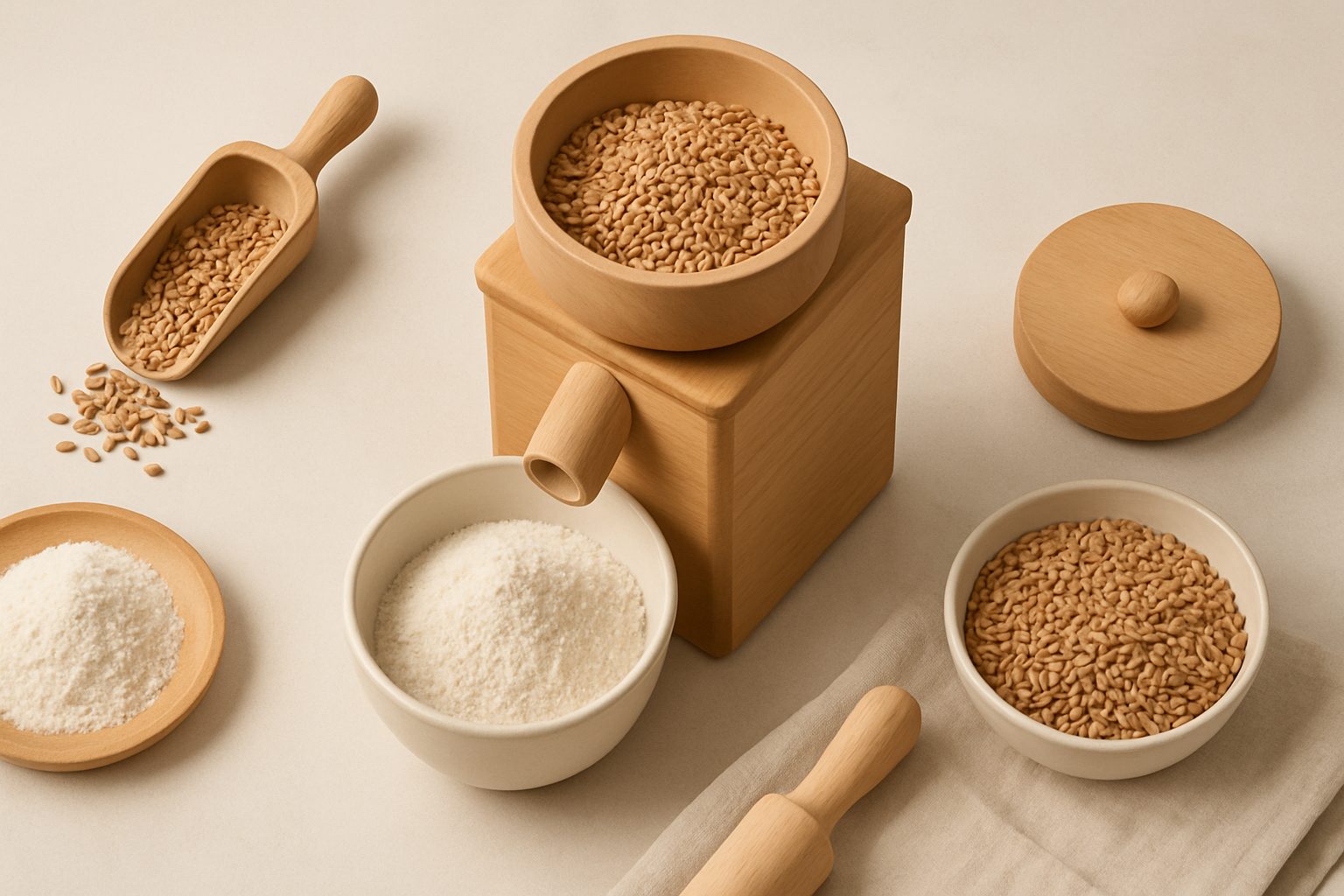
Home Grain Milling vs Buying Pre-Ground Flour UK: Real Cost Breakdown
If you've noticed pre-ground flour prices creeping upwards, home grain milling might seem like an obvious solution. But it's only worth doing if the numbers actually stack up. Let's break down whether buying a mill makes financial sense for a typical UK household.
Initial Equipment Costs
A home grain mill isn't cheap. Entry-level electric mills start around £150–£250 (basic Osttiroler or comparable), whilst decent mid-range options cost £300–£600. If you want a serious stone mill, you're looking at £800–£1500+. Manual mills sit at the lower end (£80–£150) but demand 10–15 minutes of elbow work per kilo of flour.
For this comparison, I'll use a £350 electric mill as the baseline—realistic for someone serious but budget-conscious. That's a fixed cost to recover.
Pre-Ground Flour Pricing (Current)
Supermarket own-brand plain flour: £0.45–£0.65 per kg Premium/organic plain flour: £1.00–£1.80 per kg Specialist flours (spelt, rye): £1.50–£3.50 per kg Stone-ground artisan flour: £2.00–£4.00+ per kg
These prices vary significantly by retailer and season. Buying 16kg bags in bulk (usually £6–£9) works out cheaper per kilo than individual 1.5kg packets.
Grain Costs and Mill Efficiency
Bulk grain (wheat berries) from UK suppliers: £0.25–£0.45 per kg Specialty grains (spelt, rye): £0.60–£1.20 per kg
Here's the catch: mills aren't 100% efficient. Expect 10–15% loss due to bran separation and dust. So 1kg of grain yields roughly 0.85–0.90kg of usable flour. Your effective grain cost becomes £0.28–£0.53 per kg of flour produced.
The Cost Per Kilo Breakdown
| Scenario | Cost per kg | |----------|-----------| | Supermarket own-brand | £0.50 | | Milled from bulk wheat (25% loss assumed) | £0.33 | | Organic supermarket flour | £1.40 | | Milled from organic grain | £0.75 | | Specialist artisan flour | £3.00 | | Milled from spelt grain | £0.90 |
On surface appearance, milling saves 30–50% on commodity flour. But that's before electricity, maintenance, and the time cost of handling grain.
Running Costs: The Hidden Factor
Electricity: A 500W mill running for 5–10 minutes per kg uses roughly 0.04–0.08 kWh. At current UK rates (£0.28–£0.32 per kWh), that's £0.01–£0.03 per kilo.
Grain storage: You need airtight containers, ideally a cool cupboard. Cost is negligible if you have the space.
Maintenance: Burrs wear down every 500–1000kg milled. Replacement sets cost £40–£100. That's roughly £0.04–£0.20 per kg over the burr's life.
Total per-kg running cost: £0.05–£0.25 depending on electricity rates and how hard you work the mill.
Your effective grain-to-flour cost is now £0.38–£0.70 per kg. The advantage over supermarket own-brand shrinks considerably.
Break-Even Timeline
Using the £350 mill baseline:
- vs supermarket flour (£0.50/kg): You need to mill roughly 700–900kg of flour to break even. That's 820–1060kg of grain. At typical household usage (1.5kg flour weekly), that's 9–14 years.
- vs organic supermarket flour (£1.40/kg): Break-even hits around 300kg milled flour, roughly 4–5 years.
- vs premium artisan flour (£3.00/kg): Break-even at ~150kg, around 2–3 years.
These timelines assume a single mill lifespan and no equipment failures.
Why People Actually Mill (Beyond Cost)
The financial case is marginal for budget flour. People mill because:
- Freshness: Grain stores for months; flour goes rancid in weeks. Home-milled flour tastes noticeably better.
- Control: You choose your grain, blend varieties, mill coarse or fine.
- Specialty flours: Pre-ground spelt or heritage grains cost 3–5× more than grain. Milling cuts that gap significantly.
- Whole grain: Shop-bought wholemeal flour loses nutritional quality quickly. Freshly milled is markedly superior.
If you're buying premium or specialty flour, milling makes both financial and practical sense within 2–4 years. If you're buying the cheapest commodity flour and don't care about freshness, the maths barely justify it.
The Realistic Decision
Home grain milling pays off if:
- You use specialist flours regularly (spelt, rye, heritage wheats)
- You bake frequently enough to consume milled flour before it spoils
- You value flavour and freshness over minimum cost
- You have storage space for bulk grain
It doesn't pay off if:
- You buy supermarket basics and cost is your only concern
- You mill occasionally and storage becomes inconvenient
- Electricity costs in your area are high and grain prices are already low
- You dislike equipment maintenance
Next Steps
If the numbers support milling for your situation, the next question is which mill. Budget options (£150–£350) work fine for regular home baking but are slower and less durable than mid-range mills. For a detailed comparison of specific models and what different price points actually deliver, see our guide to the best budget home grain mills.
More options
- KoMo Electric Grain Mills (Amazon UK)
- Mockmill Stone Grain Mills (Amazon UK)
- NutriMill Harvest Grain Mill (Amazon UK)
- Manual Hand Grain Mills (Amazon UK)
- Wheat Berries & Milling Grains (Amazon UK)